

Oh Canada
The history of Donald Trump's 'outlandish' claims on the country.

Donald Trump’s apparent desire to annex Canada (alongside other juicy targets), and his description of the country as America’s 51st state, might sound startling to modern ears. Yet regardless of the president’s reasons, his words accurately reflect many years of bitter relations between the United States and its northern neighbour. And this bitterness grew, in turn, out of Canada’s long-time status as a British colony. Trump’s problem with Canada, in other words, has its roots in America’s problem with Britain.
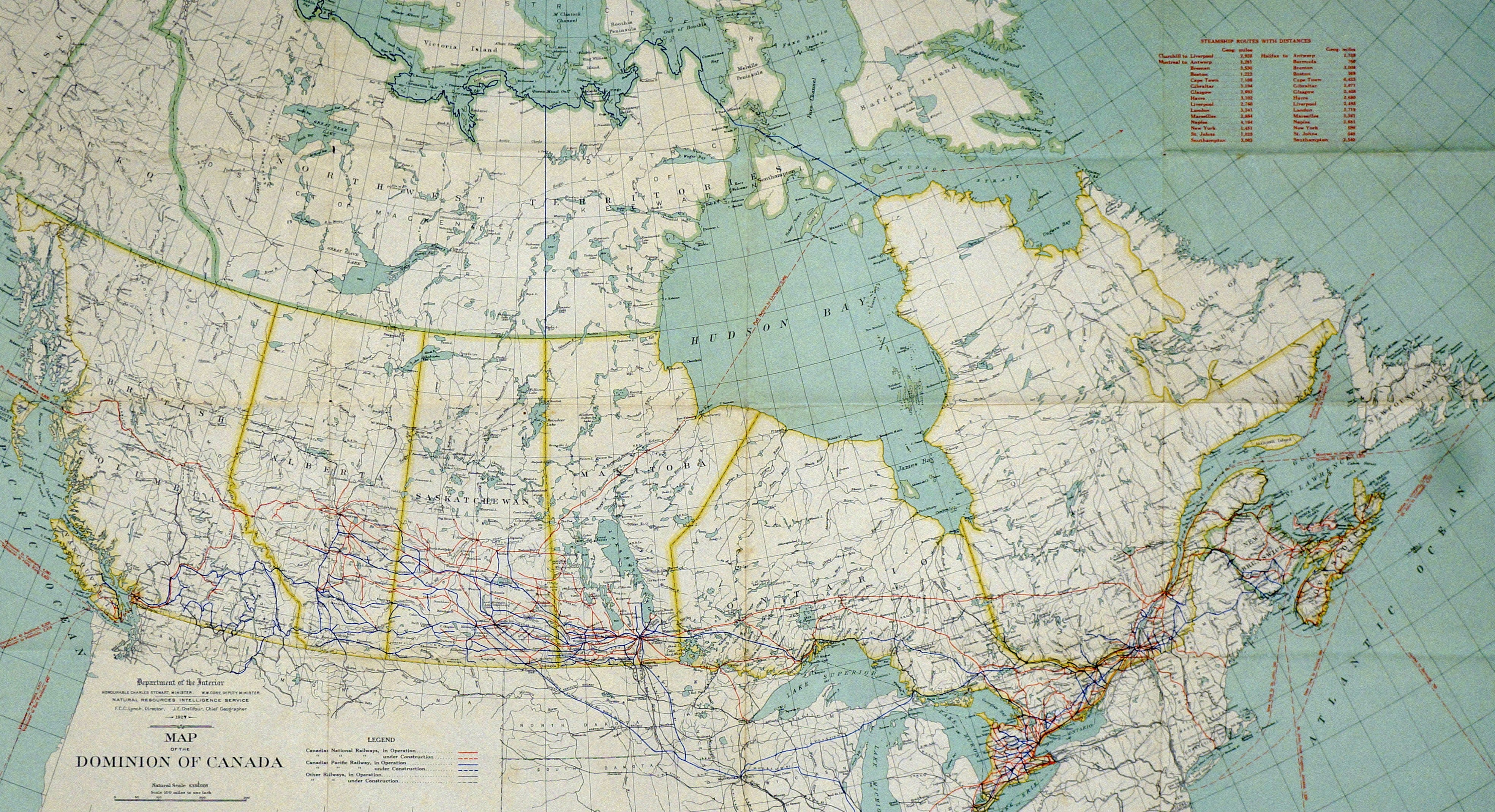
This problem can be seen very clearly between the world wars, not long before Winston Churchill and Franklin Roosevelt came together to fashion their near-legendary Special Relationship. In the late 1920s, trade and maritime rivalry between the nations had grown so fierce that Churchill was forced to admit, in a government policy paper, that an Anglo-American war was a real possibility. And even as Churchill was writing his paper, the United States was formulating a plan for just such a war with Britain. The plan was approved in 1930 and updated again in 1935.
Though a war was not imminently expected by many, War Plan Red was a great deal more than just a training exercise for army strategists. Carefully thought through and far more costly to deliver than similar plans aimed at other likely enemies, its focus was a full-scale invasion of Canada. Two separate ground attacks were to be made towards Montreal and Winnipeg, while a large body of men moved forward to protect an area comprising Detroit, Niagara and Buffalo. The United States Navy, meanwhile, would stifle British trade across the globe, stopping the supply of oil, blocking the Panama Canal and capturing British possessions throughout the Caribbean and north to the Bahamas and Bermuda. This plan, it should be stressed, was not merely hypothetical. Money was spent on air bases, posing as civilian airfields, along the Canadian border. These measures taken together, the planners believed, would bring Britain to her knees.
As startling as it sounds, then, it is only relatively recently that fierce Anglo-American rivalry and United States designs on Canada have come to seem unthinkable. Yet these realities have gone hand-in-hand ever since the British captured Canada from the French in the 18th Century, helped by colonial militiamen such as George Washington.
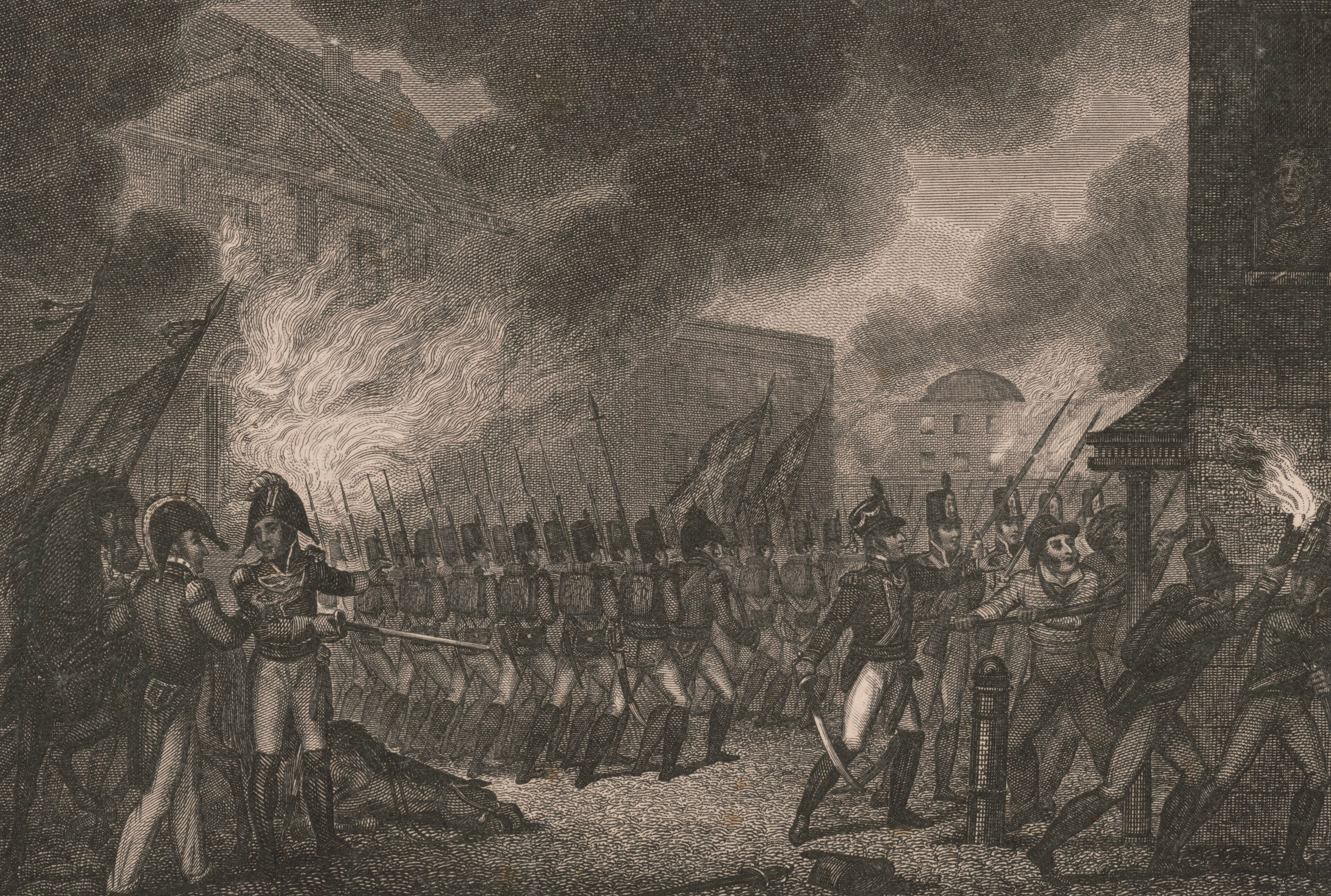
Two decades later, American victory in the Revolutionary War – inspired by the same George Washington – saw tens of thousands of loyalists fleeing north to British Canada. In 1814, with animosity towards the British remaining at fever-pitch, the Americans mounted an invasion of Canada whose conquest, according to former president, Thomas Jefferson, would be ‘a mere matter of marching’. He was proved wrong however. Not only did American forces fail to capture their northern neighbour, but the British struck at the very heart of the United States, seizing Washington D.C. and burning down both the White House and the Capitol Building. The war eventually came to an inconclusive end, allowing both nations to claim victory.
Then during the United States Civil War, a furious argument between the northern states and the British, arising from the transportation of southern diplomats on a British ship, led to the stationing of huge numbers of British troops in Canada, and - very nearly – to the outbreak of yet another war. And shortly after the Union had defeated the Confederacy, the American purchase of Alaska seemed a step towards a pincer movement to eject Britain from the continent and expand the United States by almost four million square miles.
Anglo-American quarrels continued to erupt. In 1895, a meaningless South American border disagreement escalated into a violent dispute during which a sizeable section of Congress and the American public began calling for yet another war with Britain. Winston Churchill, then a twenty-one-year-old lieutenant in the 4th Hussars, expected to find himself taking up arms against the United States. For a few days, he wrote, war ‘seemed possible and even imminent.’ Fortunately, the temperature fell and the issue was settled by arbitration.
Given this background, it hardly seems surprising that the First World War – which saw Britain and the United States fighting together but never as official allies – gave way to another period of political mistrust. Emerging from the war as the world’s greatest powers, the nations’ mistrust came to be reflected in the top secret – and seriously intended – War Plan Red.
Yet even as the nations vied politically, they never entirely lost sight of their bonds. Unique among great powers in sharing a language, they also shared heritage, culture, a system of law, and, crucially, concepts of liberty. Churchill and Roosevelt’s relationship arose out of pragmatism, and did not easily transfer to a wider audience – but it was rooted in fertile ground. It took hold.
For some years, it has seemed to some, mainly in Britain, that the Anglo-American Special Relationship describes a connection so fundamental that it reflects the natural order of things. Clearly, that is not the case, and in staking some kind of a claim on Canada, Donald Trump is mining a deep historical seam. He is reminding us that international relations are transactional and that we cannot afford to ignore the past – even when it seems dead and gone.